Cost guide · Roofing · Arizona
Roof Replacement Costs in Phoenix, AZ (2026)
Phoenix homeowners typically pay $6,097 – $13,815 for a full roof replacement, depending mostly on how much roof there is, which system is on it — tile, shingle, foam or membrane — and how much of the house sits under a low-slope section rather than a pitched one. Here's the local math, including the one that surprises people: on a tile roof, it is almost never the tile that wore out.
Phoenix, AZ typical · full replacement · Full replacement
$6,097 – $13,815
Key takeaways
- $6,097 – $13,815 is the typical all-in range for a full roof replacement in Phoenix, AZ.
- Repair and replacement are not the same job priced differently — they sit on completely different scales. The table below prices both from the same data, so you can see the gap before you decide which conversation you're having.
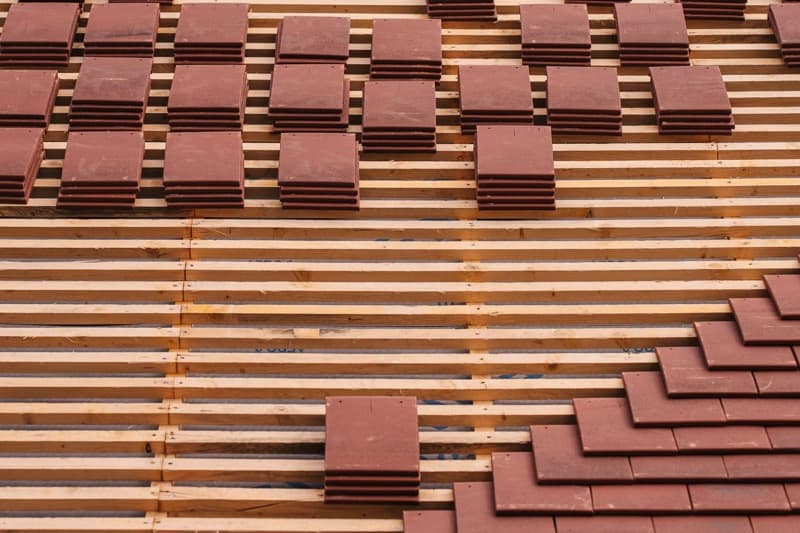
- On a tile roof, the underlayment fails long before the tile does. Concrete and clay tile last generations; the waterproofing membrane underneath them does not. That is why a roofer can stand on a tile roof that looks perfect and tell you it needs replacing — and why "replacement" here often means lifting the tile, re-underlaying, and putting the same tile back.
- Sun and thermal cycling are the failure drivers here, not rain or freeze. Published service lives are national averages, and a Phoenix roof works harder than the roofs in that sample. Monsoon wind and driven dust are the second variable; hail, unlike in the hail belt, is not the reason most Valley roofs get replaced.
Phoenix roofing costs at a glance
Typical full-replacement range · installed · Phoenix, AZ · Full replacement
$6,097 – $13,815
Repair-scale workMost Phoenix re-roofsLarge tile, low-slope & complex roofs
Roofing bids spread further than almost any other exterior trade, and in a market where three genuinely different systems compete for the same house they spread further still. A tile bid, a shingle bid and a foam bid on the same address are not three prices for one job. The range above is the typical span for a full replacement at this scope, before your roof's specifics — use it to judge the bids you collect, not to replace them.
Two things sit underneath every number on this page: how much roof there is, and how hard it is to work on. Square footage, pitch, the number of stories, whether the house has a flat section as well as a pitched one, and what has to come off before anything goes back on are what a crew is actually pricing.
What each roofing material is like to own
Phoenix is not an asphalt-default market. Concrete and clay tile cover a large share of the Valley's pitched roofs, and many of those same houses carry a low-slope or flat section that needs an entirely different system over it — sprayed foam or a single-ply membrane. This section is the other axis from cost: what each system is genuinely good at, what you give up for it, how long it lasts and what it asks of you — the same four questions for all four, including the unflattering one.
Concrete or clay tile
- Good at
- Mainstream here rather than a premium outlier. Concrete tile is the default on a large share of Valley subdivisions, so crews, replacement tile and comparable bids are all easy to find — which is not true of tile in most of the country. It handles sun and heat without degrading the way an organic surface does, it suits the Southwestern and Mediterranean facades the market was largely built with, and a single broken tile is replaceable without touching the rest of the field. Because the tile outlives the layer beneath it, a re-roof is often a lift-and-relay: the same tile comes off, new underlayment goes down, the tile goes back on. Tile is also one of the steep-slope forms the EPA lists as available in reflective, cool-roof versions.
- What you give up
- Heavy. A structure not framed for tile needs a structural evaluation before anyone can bid it honestly, and that is a cost you incur before you have a single number. Tiles crack underfoot, so every later trade that walks the roof — solar installers, satellite techs, anyone servicing rooftop equipment — is an exposure. And the big one: the underlayment underneath has a far shorter life than the tile, so a tile roof carries a mid-life re-roof that homeowners routinely fail to budget for precisely because the visible roof still looks new. A bid that quotes "a new roof" on an existing tile house may mean new underlayment and your existing tile, or all-new tile as well. Those are different jobs. Ask which one you are being quoted.
- Typical lifespan
- Clay and concrete run a century or more on InterNACHI's chart — but the tile is not the roof. The underlayment beneath it is the waterproofing, and in this climate that layer is what reaches the end of its life first, typically decades before the tile does. Plan around the underlayment; it is the part that actually fails.
- Upkeep
- Replace cracked tiles as you find them, keep valleys and roof drains clear, and keep casual foot traffic off the field. Budget for at least one underlayment replacement during the tile's service life, and treat that as scheduled work rather than a surprise.
Spray polyurethane foam (SPF)
- Good at
- Purpose-built for the low-slope and flat sections that are genuinely common on Phoenix houses, and one of the reasons foam is far more familiar here than in most metros. It goes down seamless and monolithic, self-flashes around penetrations rather than relying on a detail at each one, adds insulation across the whole deck, and can be sprayed to build slope toward a drain on a roof that never had any. It is renewable rather than disposable: at the end of a coating cycle you recoat, not tear off. And the coating is normally a bright reflective surface — high solar reflectance is the property the EPA identifies as the most important one for keeping a roof and the rooms under it cooler, which is worth more here than almost anywhere.
- What you give up
- It is a maintenance commitment, not a set-and-forget roof, and the penalty for skipping the recoat is severe rather than gradual — bare foam has no ultraviolet tolerance, so the coating is the roof's actual defense against the thing that dominates this climate. Quality varies more than with any other system on this page: ponding, thin spots and poor adhesion are hard to see from the ground and expensive to correct later, and fewer crews apply it genuinely well. It is soft enough to be damaged by dropped tools and dragged equipment. And it looks like what it is, which matters if the section is visible from the street.
- Typical lifespan
- The Spray Polyurethane Foam Alliance puts a spray foam roof at 40 or more years with regular care and maintenance. Read the second half of that sentence as a condition, not a footnote — the number assumes the recoats actually happen.
- Upkeep
- The one system here that requires scheduled attention rather than reactive repair. SPFA advises inspection twice a year and after severe weather, which in the Valley means after monsoon storms. Keep the coating intact, repair punctures promptly, and recoat on the manufacturer's interval rather than when a leak shows up inside.
Single-ply membrane (TPO, PVC, EPDM)
- Good at
- The other mainstream answer for a flat or low-slope section, and the more conventional one. Installation is mechanically simpler and quicker than foam, the market for it is larger so bids are easier to compare, and a bright white membrane is a cool roof out of the box — the EPA lists single-ply membranes among the standard reflective options for low-slope roofs. When it fails it usually fails locally, at a seam or a penetration, and a local failure is patchable without touching the rest of the field.
- What you give up
- Seams and penetrations are the failure points, and both are workmanship-dependent in a way a seamless system is not — the quality of the flashing at every pipe, curb and unit is the roof. Service lives are shorter than tile or a maintained foam roof, and heat plus ultraviolet exposure works the material hard here. On a roof people walk to service rooftop HVAC, punctures are a real ongoing exposure. Unlike foam, it adds no meaningful insulation on its own and cannot re-slope a deck that ponds.
- Typical lifespan
- InterNACHI's chart puts EPDM at 15 to 25 years, TPO at 7 to 20, and modified bitumen around 20. The width of the TPO span is the honest part — formulation and installation quality vary enough to move a roof from one end of it to the other.
- Upkeep
- Keep drains and scuppers clear so water leaves the roof rather than sitting on it, have seams and flashing at every penetration inspected periodically, and check after wind events. Repair punctures when you find them, not at the next re-roof.
Architectural asphalt shingle
- Good at
- Still the least expensive way to cover a pitched roof, and the system every roofer in the market installs — so three comparable bids are easy to collect. It is the easiest roof to repair in a section rather than whole, materials are stocked everywhere, and the weight question that complicates tile does not arise. Cool-colored granules are available and are on the EPA's list of reflective steep-slope options, which narrows but does not close the heat gap with tile.
- What you give up
- The shortest service life of the four in this climate, and the one most exposed to what this climate actually does. Ultraviolet exposure and daily thermal cycling are what age asphalt — granule loss, curling, cracking — and a Phoenix slope gets more of all three than the average roof behind any published lifespan figure. Fewer local crews specialize in it than in tile-heavy markets. And on streets where tile is the neighborhood norm, a shingle roof reads as the cheaper choice to a buyer, which matters in some Valley subdivisions and not at all in others.
- Typical lifespan
- Roughly 30 years for architectural shingles on InterNACHI's chart, and 20 for three-tab. Treat both as ceilings set by roofs in milder places than this one.
- Upkeep
- Keep gutters and valleys clear, keep overhanging limbs off the surface, and have flashing and penetrations looked at after a serious monsoon storm. The roof itself asks for nothing until something is wrong.
Lifespan and upkeep sources: InterNACHI — Standard Estimated Life Expectancy Chart for Homes · Spray Polyurethane Foam Alliance — SPF roofing systems · U.S. EPA — Using Cool Roofs to Reduce Heat Islands · Tile Roofing Industry Alliance — technical briefs · HomeAdvisor — roof installation and replacement cost guide · HomeAdvisor — roof repair cost guide
What a roof replacement actually changes
The two conditions side by side — what is usually coming off, and what goes back on. Typical of the projects this guide prices, not of any one house.
Replacing a roof that has reached the end of its service life
- Shingles that have lost their granules, curled at the edges or gone brittle, so the surface stops moving water off the roof.
- Flashing at walls, valleys and penetrations that has shifted or corroded — the details a roof leaks at long before the field of shingles gives out.
- Decking and underlayment nobody has looked at since the last installation.
- The old covering comes off so the deck can be inspected and any soft sheathing replaced before anything new goes down.
- New underlayment, and new flashing at every valley, wall and penetration rather than the old metal reused.
- A covering and a detail set chosen for the hazard that actually applies where you live — impact resistance for hail, uplift for wind, ice-dam and ventilation detailing for cold winters.
What changes: The roof goes back to being a system rather than a surface: what is under the shingles has been seen, and the points it leaks at are new.
Describes the condition typically being replaced and a full tear-off replacement. It is not a record of one home, and no photograph here is of a specific project.
Sources: InterNACHI — Standard Estimated Life Expectancy Chart for Homes · National Roofing Contractors Association — Preventing ice dams · IBHS — relative hail impact resistance of asphalt shingles
Cost by scope of work
Typical installed range by scope of work, Phoenix, AZ.
| Scope of work | Typical range |
|---|---|
| Repair (patch, leak fix, cracked tile, section) | $408 – $2,032 |
| Full replacement (tear-off or lift-and-relay, then re-roof — most common) | $6,097 – $13,815 |
Roofing does not scale smoothly the way a per-unit trade does. The honest split is repair versus replacement — a patch, a leak fix, a handful of cracked tiles or a re-flashed valley is a half-day for a small crew, while a re-roof is a crew, a dumpster, a disposal fee and a day or more on the roof. Everything else — square footage, pitch, stories, which system, how much of the house is low-slope — moves you within the replacement band rather than between the two.
The decision between them is usually about remaining life, not about the damage in front of you, and on a tile roof that means the remaining life of the underlayment rather than of anything you can see. Repairing a roof with years left is good money; repairing one near the end of its service life buys time you will pay for twice.
What moves your number in Phoenix
Size, pitch and stories
Roofers price by the square — one hundred square feet of roof surface — so square footage sets the baseline. Pitch and height then set the labor multiplier: a steep roof needs staging and fall protection and slows a crew down, and a two-story job costs more to reach than a single-story ranch of the same area. Tile adds a further wrinkle, because the crew is handling and stacking weight rather than carrying bundles.
Tile, and whether you are buying tile or underlayment
This is the Phoenix question, and it is the one that most often makes two bids look incomparable. On a tile roof the waterproofing is the underlayment beneath the tile, and that layer wears out long before the tile does. So a re-roof may be a lift-and-relay — your existing tile comes off, new underlayment goes down, the same tile goes back, with an allowance for breakage — or it may be a full tear-off with all-new tile, which is a substantially larger job. Ask every bidder to state in writing which one they priced, what percentage of tile breakage they assumed, and what happens if the actual breakage runs higher.
How much of the house is low-slope
A great many Valley homes are not one roof but two: a pitched section in tile or shingle, and a flat or low-slope section that needs a foam, membrane or built-up system over it. Those are different materials, sometimes different crews, and always a separate line. A bid that gives one number for "the roof" without breaking out the low-slope section is hiding the part most likely to leak, and the transitions between the two systems are where the flashing detail actually matters.
Sun, heat and thermal cycling
The dominant failure driver here is not water. Ultraviolet exposure degrades organic surfaces and uncoated foam, and the daily expansion and contraction of a deck that swings through a wide temperature range works fasteners, sealants and seams loose over time. It is why published national service lives read optimistic in this market, and why the maintenance items on a Phoenix roof — coatings, sealants, flashing — are the ones that decide whether your roof reaches the top or the bottom of its band.
Monsoon wind, driven rain and dust
Summer monsoon storms bring the concentrated wind and rain events of the Valley year, and the failures they expose are almost always pre-existing: a lifted tile, a tired flashing, a seam that had been marginal for a season. Blowing dust also loads valleys, drains and scuppers, and a low-slope roof that cannot drain is a low-slope roof that ponds. Have the roof looked at before the season rather than after, and expect demand and scheduling to tighten in the weeks following a significant storm.
Reflectance and what the roof costs you to live under
In a cooling-dominated climate the roof's surface is part of the air conditioning bill. The EPA reports that solar reflectance from a cool roof can cut peak cooling demand by 11 to 27 percent in air-conditioned residential buildings, and reflective options exist across the systems used here — coatings and bright membranes on low-slope sections, reflective tile and cool-colored granules on pitched ones. Raise it while material is still a decision; it is a specification, not an upgrade you bolt on later.
Licensing and permits
Unlike some Sun Belt states, Arizona does license roofing contractors: the Registrar of Contractors issues a roofing classification, and a license number can be looked up and checked for status, bond and complaint history before you sign anything. Do that. Permit requirements depend on scope and jurisdiction, and a Phoenix-area address can sit in the city or in one of a dozen neighboring municipalities — ask each bidder to confirm in writing what your job requires and who is pulling it.
How people pay for a roof replacement
A project in this range is more often paid for over time than out of savings, and the route you take changes what it ends up costing. These are the ones people actually use, and they are not interchangeable.
Where we stand: We are not a lender and we do not arrange, broker or earn anything from financing. Nothing here is an offer of credit or a recommendation — it is background on how projects this size are usually paid for, so you can ask better questions of the people bidding on yours.
- Credit the contractor arranges
- Many home-improvement firms can set up financing for the job at the point of sale, through a lender they already work with. The paperwork happens alongside the contract rather than at a bank.
- The tradeoff: It is the least comparable of the routes, because you usually see one option rather than several — and a plan sold as promotional can convert to ordinary interest, sometimes backdated to the start, if the balance is not cleared in time. Get the full terms in writing before the contract is signed, not after.
- Borrowing against the home
- A home equity loan is a fixed amount taken as a lump sum; a home equity line of credit (HELOC) is a revolving line you draw on. The FTC describes both as second mortgages when you already have a first one.
- The tradeoff: Your house is the collateral, so falling behind puts the home itself at risk — this is the route with the most serious downside and it belongs on a list with the others precisely so that is visible. Federal law gives you until midnight of the third business day to cancel credit secured by your home.
- An unsecured personal loan
- A fixed sum from a bank, credit union or online lender, repaid on a schedule, with nothing pledged against it. Nothing about the loan is tied to the project, so the money is yours to spend on whichever bid you accept.
- The tradeoff: Unsecured credit costs more than credit backed by an asset, and what you are offered depends on your own credit history. The upside of the same fact is real: nobody can take the house over it.
- Manufacturer and utility programs
- Product manufacturers run seasonal promotions through their certified installers, and utilities and state energy offices run rebate and low-cost loan programs for efficiency work. Both are worth asking about because both are invisible unless you do.
- The tradeoff: They are conditional and they expire — tied to particular products, particular efficiency ratings, an application filed before the work starts, or a window of dates. A promotion is a reason to check eligibility, never a reason to choose a contractor.
What to ask every bidder
- Who actually lends the money, and are you paid anything for placing it?The firm selling the work and the firm holding the debt are usually not the same company, and the answer tells you who to call when something goes wrong.
- What is the total I will have repaid by the end, in dollars?One number, comparable across every bid. The monthly payment is not comparable — it can be lowered by stretching the term, which raises the total.
- If this is a promotional plan, what happens if I have not paid it off when the promotion ends?Some plans charge the interest that accrued during the promotional period all at once. A firm that cannot answer this plainly, in writing, has told you something.
- What is the price if I pay without financing?If the two prices differ, the difference is part of what the credit costs. Ask for both on the same written quote, so the bids stay comparable.
Your roof isn't the average. Get your project's typical Phoenix range.
A few quick questions — scope, material, timeline. Anonymous until you want bids.
Free · no phone number needed to see your range
Does a new roof pay back?
Remodeling Magazine's Cost vs. Value reporting has consistently put roof replacement mid-pack among exterior projects, recouping a substantial share — but not all — of its cost at resale. Read it as a floor rather than a return: nobody buys a roof as an investment.
The Phoenix argument has two additional pieces. The first is transactability: a roof at the end of its life shows up in the buyer's inspection and in the buyer's insurance quote, and it gets priced into the negotiation whether or not you priced it first — and on a tile house, an inspector reading the underlayment rather than the tile will find it before the buyer does. The second is the cooling bill, which is a running cost here rather than a seasonal one, and which a reflective surface measurably reduces. Neither makes a roof an investment. Together they make it a precondition for the house trading normally and for the air conditioning not fighting the roof.
Five ways Phoenix homeowners keep the number down
- On a tile roof, ask whether it is a lift-and-relay before you accept a full tear-off price. If the tile is sound, you may be buying underlayment and labor rather than a roof's worth of new tile — and that is a different number. Get the assumed breakage percentage in writing.
- Make the low-slope section its own line item. If the house has a flat portion, insist that every bid scopes it separately — system, thickness or membrane type, drainage, and the flashing detail where it meets the pitched roof. It is the part most likely to leak and the part most often glossed over.
- Bid outside peak summer and outside the post-monsoon rush. Roof-deck temperatures in high summer are hard on crews and on materials, and demand and scheduling both tighten in the weeks after a significant storm. Late fall through early spring is generally the calmest stretch to get attentive bids.
- Make all three bids price the same scope — underlayment type, fasteners, flashing, ventilation, drainage, decking allowance and disposal. Totals are only comparable when the scope behind them is, and in a market with three competing systems that is easy to lose track of.
- Check the ROC license before the deposit, and ask about a reflective option while material is still a decision. Arizona licenses roofing contractors, so status, bond and complaint history are all lookup-able — and a cool-roof specification costs far less chosen at bid time than retrofitted later.
Where these numbers come from
Methodology. A baseline range for this project scope is adjusted for your area by a Phoenix, AZ labor and materials multiplier. Both inputs are cited below, straight from the rows that produced the figures on this page. Ranges are typical costs, not quotes: your final price depends on your roof and the bids you collect. Contractors cannot pay to change the numbers we publish.
This page's figures are priced from ZIP 85003, which resolves to Phoenix, AZ (multiplier ×1.033).
Baseline: Same national replacement band as the roofing default — the default IS a replacement-typical span (#26 decision, 0041). HomeAdvisor — roof replacement cost guide (updated Jun 17, 2026): "Most homeowners spend between $5,902 and $13,374 for a full roof replacement, with the national average sitting at $9,608."
Regional multiplier: Derived: BEA Regional Price Parities, all items, Phoenix-Mesa-Scottsdale, AZ (MSA) = 103.316 (2024) ÷ 100. Published metro price-level index (FRED series RPPALL38060) on the same national-is-1.000 scale the state tier uses; a consumer price-level proxy, not a construction cost index.
Figures retrieved: 2026-09-06
Phoenix roofing cost FAQs
What does a roof replacement cost in Phoenix in 2026?
Most Phoenix homeowners land inside the typical full-replacement range shown above. Where you fall inside it depends mostly on how much roof there is, which system goes on it, how much of the house sits under a low-slope section, and — on a tile house — whether the existing tile is being relaid or replaced. Those last two are the questions that most often separate two bids on the same address.
My tile roof looks fine. Why does the roofer say it needs replacing?
Because on a tile roof the tile is the weather surface, not the waterproofing. The underlayment beneath it is what keeps water out, and it has a far shorter service life than the tile above it — InterNACHI puts clay and concrete tile at a century or more, while the membrane underneath is measured in decades. So a tile roof reaching the end of its life looks exactly like a tile roof that is fine. Ask the roofer to show you photographs from the roof, and ask specifically whether your existing tile can be lifted and relaid over new underlayment rather than replaced.
Is a foam roof a good idea for my flat section?
It is one of two mainstream answers here, and the trade is clear. Sprayed polyurethane foam goes on seamless, self-flashes penetrations, adds insulation and can be built up to drain a deck that ponds — the Spray Polyurethane Foam Alliance puts a well-maintained foam roof at 40 or more years. The condition is the maintenance: bare foam has no ultraviolet tolerance, so the reflective coating over it is the roof's actual protection, and it must be inspected and recoated on schedule rather than when a leak appears. A single-ply membrane asks less of you but relies on seams and flashing details and generally does not last as long. If you will not keep up a recoat schedule, do not buy a foam roof.
Do I need a permit, and is my roofer licensed?
Permit requirements depend on scope and jurisdiction, and a Phoenix-area address may sit inside the city or in a neighboring municipality — ask each bidder to confirm in writing what your job needs and who pulls it. On licensing, Arizona does regulate roofing contractors through the Registrar of Contractors, which issues a roofing classification. That means a license number is something you can look up and check for status, bond and complaint history before you sign. Ask for the number, verify it yourself, and separately ask for proof of liability and workers' compensation coverage from the insurer rather than from a flyer.
When is the best time of year to replace a roof in Phoenix?
Late fall through early spring. High-summer roof-deck temperatures are hard on the crew and on the materials going down, and the weeks after a significant monsoon storm are when demand spikes, local crews book out and pricing firms up. If the roof is not actively leaking, bidding in the cool season is the cheapest scheduling decision available to you — and it puts a sound roof in place before the next monsoon rather than after it.
Roofing costs in nearby cities
Other Phoenix project costs
Keep reading
All guides →
Window replacement costs in Phoenix, AZ (2026)