Cost guide · Windows · Illinois
Window Replacement Costs in Chicago, IL (2026)
Chicago homeowners typically pay $6,216 – $9,324 for a whole-home window replacement, depending mostly on frame material and how many openings you do at once. Here's the full local math — per window, per project, and what moves your number.
Chicago, IL typical · whole project · 8–12 windows
$6,216 – $9,324
Key takeaways
- $6,216 – $9,324 is the typical all-in range for a whole-home window project in Chicago, IL.
- Frame material is the biggest lever — vinyl is the value pick and wood clad the premium one. We do not publish a per-material band for this metro yet, so treat the gap as the reason to price two materials rather than as a number to plan around.
- Chicago runs above the national average — the multiplier applied to every figure on this page is cited in the methodology, and it is a union-shop labor market in a cold climate where window specs are heavier.
Chicago window costs at a glance
Typical project range · installed · Chicago, IL · 8–12 windows
$6,216 – $9,324
Budget vinylMost Chicago projectsWood / custom
If you've collected three bids and they're thousands apart, you're not being scammed — you're seeing how opaque this market is. Contractors price the same job differently based on backlog, crew costs, and how much they want the work. The range above is the typical span for a project of this scope, before your home's specifics — use it to judge the bids, not to replace them.
Cost per window by material
We do not publish a per-material band for Chicago, IL yet, so there is nothing to show here — rather than a whole-project figure standing in for a per-window one. Per-window material pricing appears here when the underlying cost data is published.
What a window replacement actually changes
The two conditions side by side — what is usually coming out, and what goes in. Typical of the projects this guide prices, not of any one house.
Replacing original single-pane or early aluminum windows
- One layer of glass, or two with a seal that has failed — the pane sits close to the outdoor temperature all year.
- An aluminum frame with no thermal break conducts heat straight through, so the frame itself is the cold edge in winter.
- Sashes that stick, locks that no longer catch, and condensation that collects along the bottom rail.
- Two or three panes with a sealed gas fill and a low-emissivity coating, which reflects heat back toward the side it came from.
- Vinyl, wood, fiberglass or composite frames — or aluminum with a thermal break — so the frame is no longer the weak point.
- Sashes that operate and lock, which is an egress and security question as much as a comfort one.
What changes: The room stops having a cold or hot edge near the glass, and the window becomes something you can open and shut without arguing with it.
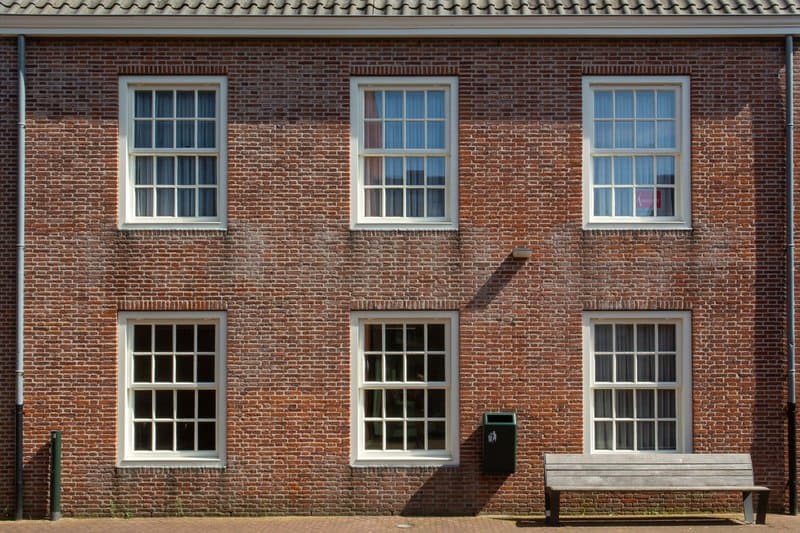
Describes the condition typically being replaced and a current ENERGY STAR–qualifying replacement. It is not a record of one home, and no photograph here is of a specific project.
Sources: ENERGY STAR — window framing materials and key product criteria · NFRC Consumer Guide to Windows — non-metal frame types
Cost by project size
Typical installed range by window count, Chicago, IL.
| Project size | Typical range |
|---|---|
| 1–2 windows (repair-scale) | $207 – $2,486 |
| 3–7 windows (partial) | $622 – $8,702 |
| 8–12 windows (whole home — most common) | $6,216 – $9,324 |
| 13+ windows (large home) | $9,324 – $20,720 |
Per-window pricing drops as count rises — crews amortize setup across the day. That's why a 10-window project rarely costs 10× a single window.
What moves your number in Chicago
Frame material
Vinyl and wood clad sit at opposite ends of the range on this page, and we do not publish a per-material figure for this metro — the methodology below cites what we do have. So price both if you are unsure: the gap between them is the single biggest lever on your total, and the only way to know your gap is to have two bids in hand.
Chicago labor
This is a union-shop market and the multiplier on this page reflects it: every figure here is the national band adjusted upward for Chicago labor and materials. The exact factor and its source are in the methodology below.
Cold-climate specs
ENERGY STAR sets different criteria by climate zone: a Northern-zone window is specified for holding heat in, where a Sun Belt one is specified for keeping it out. The same model number is not the same product across zones. Ask each bidder to quote units certified for the Northern zone and to put the certification on the quote, not just in the sales copy.
Older housing stock
Chicago bungalows, greystones and two-flats often have out-of-square openings, weight-and-pulley frames, or original storm windows. Rot and re-framing behind old units is the usual surprise line item — budget a 10–15% contingency.
Permits
Replacement inside an existing opening is treated differently from enlarging one. We do not publish a permit rule here, because it is the kind of thing you should be relying on your contractor and the city for rather than on a cost guide. Ask every bidder to state in writing whether a permit applies to your scope and who is responsible for pulling it.
How people pay for a window replacement
A project in this range is more often paid for over time than out of savings, and the route you take changes what it ends up costing. These are the ones people actually use, and they are not interchangeable.
Where we stand: We are not a lender and we do not arrange, broker or earn anything from financing. Nothing here is an offer of credit or a recommendation — it is background on how projects this size are usually paid for, so you can ask better questions of the people bidding on yours.
- Credit the contractor arranges
- Many home-improvement firms can set up financing for the job at the point of sale, through a lender they already work with. The paperwork happens alongside the contract rather than at a bank.
- The tradeoff: It is the least comparable of the routes, because you usually see one option rather than several — and a plan sold as promotional can convert to ordinary interest, sometimes backdated to the start, if the balance is not cleared in time. Get the full terms in writing before the contract is signed, not after.
- Borrowing against the home
- A home equity loan is a fixed amount taken as a lump sum; a home equity line of credit (HELOC) is a revolving line you draw on. The FTC describes both as second mortgages when you already have a first one.
- The tradeoff: Your house is the collateral, so falling behind puts the home itself at risk — this is the route with the most serious downside and it belongs on a list with the others precisely so that is visible. Federal law gives you until midnight of the third business day to cancel credit secured by your home.
- An unsecured personal loan
- A fixed sum from a bank, credit union or online lender, repaid on a schedule, with nothing pledged against it. Nothing about the loan is tied to the project, so the money is yours to spend on whichever bid you accept.
- The tradeoff: Unsecured credit costs more than credit backed by an asset, and what you are offered depends on your own credit history. The upside of the same fact is real: nobody can take the house over it.
- Manufacturer and utility programs
- Product manufacturers run seasonal promotions through their certified installers, and utilities and state energy offices run rebate and low-cost loan programs for efficiency work. Both are worth asking about because both are invisible unless you do.
- The tradeoff: They are conditional and they expire — tied to particular products, particular efficiency ratings, an application filed before the work starts, or a window of dates. A promotion is a reason to check eligibility, never a reason to choose a contractor.
What to ask every bidder
- Who actually lends the money, and are you paid anything for placing it?The firm selling the work and the firm holding the debt are usually not the same company, and the answer tells you who to call when something goes wrong.
- What is the total I will have repaid by the end, in dollars?One number, comparable across every bid. The monthly payment is not comparable — it can be lowered by stretching the term, which raises the total.
- If this is a promotional plan, what happens if I have not paid it off when the promotion ends?Some plans charge the interest that accrued during the promotional period all at once. A firm that cannot answer this plainly, in writing, has told you something.
- What is the price if I pay without financing?If the two prices differ, the difference is part of what the credit costs. Ask for both on the same written quote, so the bids stay comparable.
Your home isn't the average. Get your project's typical Chicago range.
Four quick questions — scope, material, timeline. Anonymous until you want bids.
Free · no phone number needed to see your range
Do new windows pay back in Chicago?
Window replacement sits mid-pack among exterior projects for resale return, and we do not publish a regional resale figure we cannot cite. The Chicago-specific case is the heating season — replacing single-pane or failed double-pane units is a comfort and operating-cost decision first, in a climate that runs the furnace for a large part of the year. Ask each bidder for the U-factor on the units they are quoting; it is the number that does the work here.
Four ways Chicago homeowners keep the number down
- Bid when the season closes. Crews compete hardest once the fall backlog clears; spring and summer are peak.
- Get at least three bids for anything over $5,000 — the spread itself is information.
- Compare per-window pricing, not project totals — it travels better between bids.
- Do the whole home at once if you can; per-window cost drops meaningfully with count.
Where these numbers come from
Methodology. A baseline range for this project scope is adjusted for your area by a Chicago, IL labor and materials multiplier. Both inputs are cited below, straight from the rows that produced the figures on this page. Ranges are typical costs, not quotes: your final price depends on your home and the bids you collect. Contractors cannot pay to change the numbers we publish.
This page's figures are priced from ZIP 60601, which resolves to Chicago, IL (multiplier ×1.036).
Baseline: Angi — Window Replacement Cost (updated Aug 3, 2026), "Cost by Number of Windows" table (standard double-hung windows, professional installation): 8–12 windows = $6,000–$9,000.
Regional multiplier: Derived: BEA Regional Price Parities, all items, Chicago-Naperville-Elgin, IL-IN-WI (MSA) = 103.595 (2024) ÷ 100. Published metro price-level index (FRED series RPPALL16980) on the same national-is-1.000 scale the state tier uses; a consumer price-level proxy, not a construction cost index.
Figures retrieved: 2026-09-06
Chicago window cost FAQs
What do window replacements cost in Chicago in 2026?
Most Chicago homeowners land inside the typical project range shown above for a whole-home replacement. Where you fall inside it depends mostly on frame material and how many openings you do at once; larger homes and wood-clad or custom units run higher.
Why is Chicago more expensive than the national average?
Every figure on this page is a national band adjusted by a regional multiplier, and Chicago's is above 1.0 — a union-shop labor market, and cold-climate window specs that cost more than Sun Belt equivalents. The multiplier and its source are printed in the methodology section.
Do I need a permit to replace windows in Chicago?
It depends on whether the opening changes. We deliberately do not print a rule here — permitting is exactly the claim a cost guide should not be the source of truth for. Do not take a verbal answer either: ask each bidder to state in writing whether your scope needs a permit and who is responsible for pulling it.
When is the cheapest time of year to replace windows?
Late fall and winter, once the peak backlog clears. Installers can work in cold weather — units go in one opening at a time — but confirm the crew's cold-weather process before scheduling a January job.
Is it worth replacing all windows at once?
Usually, yes — per-window cost drops as count rises because crews amortize setup. If budget forces phasing, do the worst-performing and most-used rooms first; in a heating-dominated climate that is where the comfort gain shows up.
Window costs in nearby cities
Other Chicago project costs
Keep reading
All guides →
What a roof replacement costs, and when to do it with the windows